
A chapter on eye fatigue
Dry Eye and Lubricating Drops
Not all screen fatigue is strain. If your eyes sting, feel sandy, or water at odd moments, dryness may be the underlying issue — and it behaves differently from simple tiredness.
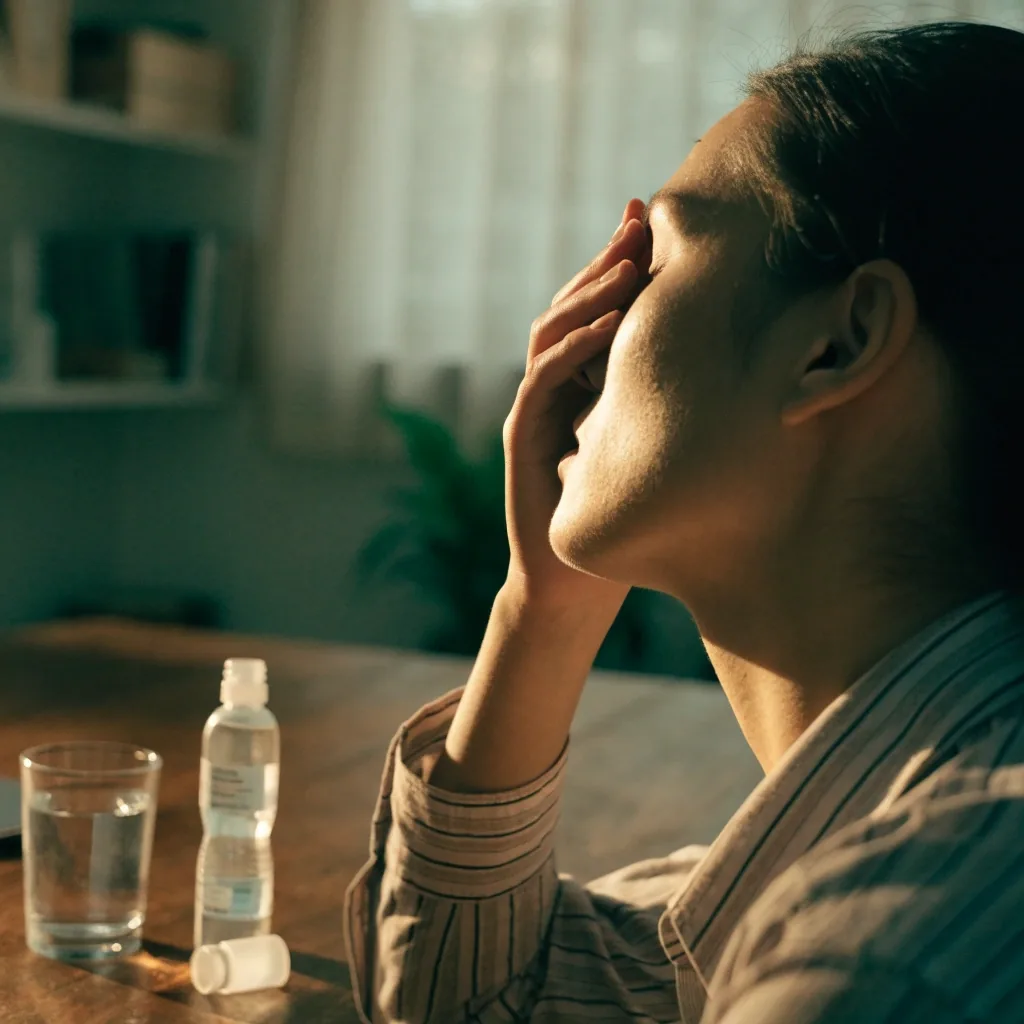
The quiet hour at the desk — a still that runs longer than the screen does.
This page covers what dry eye looks like during screen work, and how lubricating drops and humidity fit into managing it.
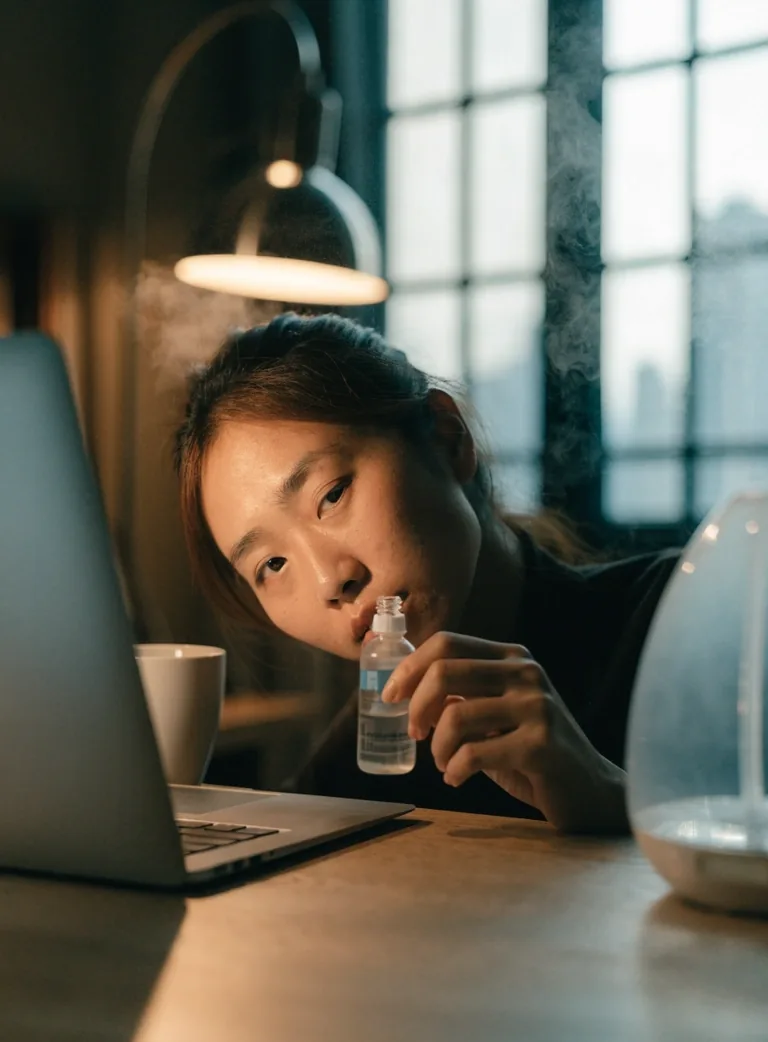
How Dry Eye Differs From Strain
Strain is the heavy, achy feeling that comes from sustained focus and eases when you rest. Dry eye shows up as burning, stinging, a gritty sensation, or eyes that water unexpectedly, and it can persist on low-screen days. The two often occur together, which is why people confuse them.
A useful test is whether comfort improves when you rest your eyes, or when you address the environment — moving away from air conditioning, for example. If shutting the laptop helps within minutes, you are likely looking at strain. If the sandy feeling stays with you through an evening away from screens, dryness deserves a closer look.
Two sensations, two cues
Dry eye reads as
Burning, stinging, a gritty or sandy sensation, or sudden watering with no clear trigger.
Strain reads as
Heaviness behind the eyes, an ache at the brow, difficulty holding focus on a bright screen.
When they overlap
Long screen days can start as strain and finish as dryness. Treat the environment as well as the break.
Why Screens Make Dryness Worse
Blinking slows during screen use, and when it slows, the tear film that coats the eye breaks up faster. That film is what keeps the surface smooth and comfortable. Fewer blinks means more exposed surface and quicker evaporation, and it happens even if you never had a dryness problem before.
Understanding that link is what makes the rest of the routine make sense. The drops, the humidifier, the deliberate blink at the top of each hour — none of them fix a single cause on their own. Each one shrinks the window during which the tear film is left exposed.
A slow blink is not the same as closing your eyes. Closing for several seconds lets the tear film rebuild; a fast screen-blink barely re-spreads it. That distinction is why the deliberate blink at a break does more than blinking harder while you work.
A friend for the day
The blinking pattern you change at your breaks carries past them.
Once you start counting, you notice that you often blink differently on the first minute after looking away. That first minute is worth practicing on purpose — the pace stays with you longer than a fifteen-second pause ever could.

What Lubricating Drops Do and Do Not Do
Lubricating drops supplement the natural tear film and provide temporary comfort. They are supportive rather than corrective: they do not fix the blinking pattern or the room conditions that caused the dryness, so they work best alongside other changes. If you find yourself reaching for them constantly, that is a sign to address the environment and your screen habits as well.
Where drops help most clearly is in the middle of a long day: a dose before a difficult stretch of reading, another at the point your eyes start to feel grainy. What they do not replace is the pause itself. The drop wets the surface for a while; a real break rests it.
Everyday frame
Use before the ache
A drop as the reading stretch begins tends to help more than one after it already hurts.
Keep the bottle close
A bottle across the room loses to a bottle in the desk drawer, in practice.
Plan the next move
Pair the drop with the room change — humidity on, air off your face — and the effect lasts longer.
When to Ask About Preservative-Free Options
Some people find that drops with preservatives irritate their eyes when used often. Preservative-free single-use vials are an option worth asking a pharmacist or eye care professional about, particularly if you use drops several times a day. This is a question for someone who can examine your eyes, not something to solve by switching brands repeatedly on your own.
Using drops once or twice a day
A preservative-containing drop is often well tolerated at this frequency; ask your pharmacist if you are unsure.
Reaching for the bottle several times a day
Worth raising preservative-free single-use vials as a question — not switching brands alone.
Noticing stinging right after a drop
Take the reaction to a professional rather than trying another brand on your own.
Comfort still worsening despite daily use
This is a reason for an eye exam, not a reason for a different bottle.
Humidity and Air-Conditioned Rooms
Cleveland Clinic lists humidifiers as a supportive measure for eye strain, and they are especially relevant in air-conditioned rooms. Cold, dry air pulls moisture from the eye surface, and sitting directly in the airflow makes it worse. A humidifier nearby, or simply moving out of the vent's path, can reduce how often dryness builds up during a workday.
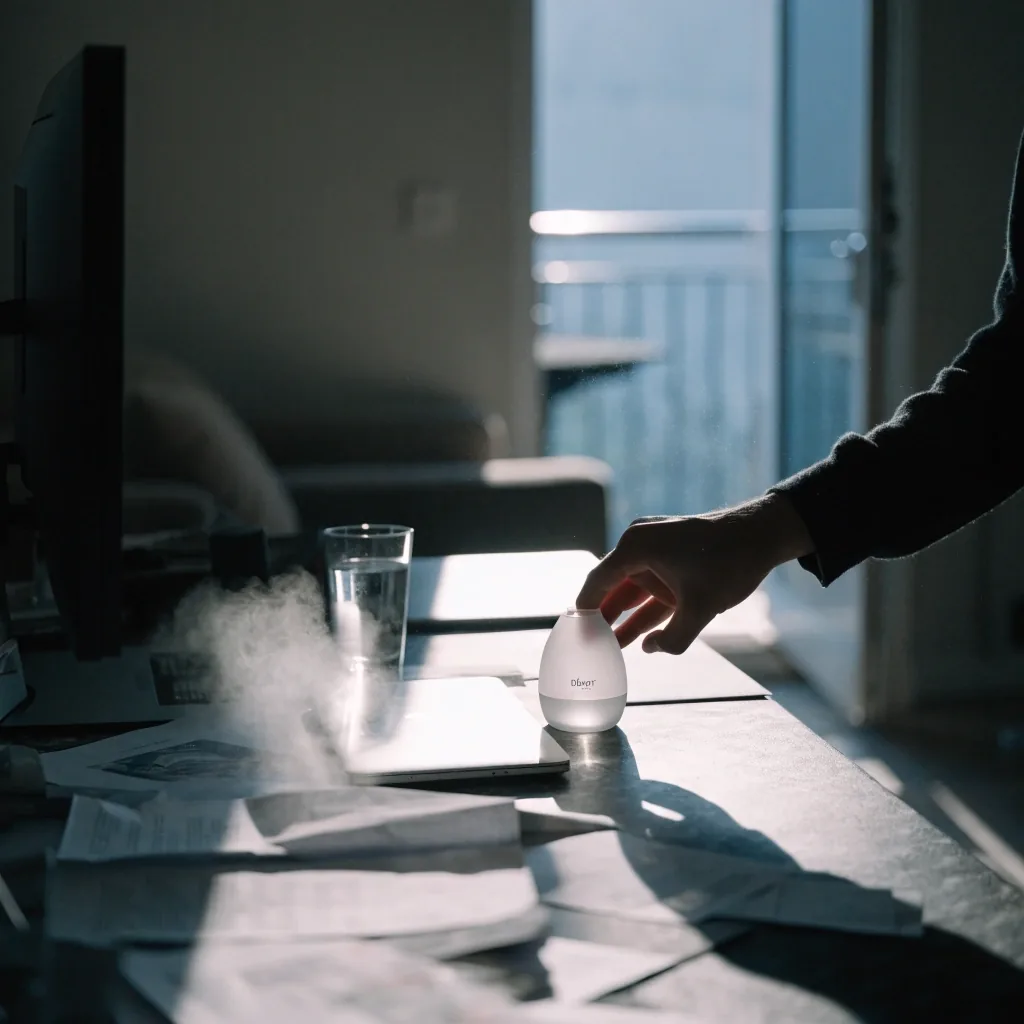
In a Jakarta office the air conditioner runs most of the day, so the score is rarely about humidity in the air in general. It is about whether the air passing over your face is moving fast, cold, and dry. A small humidifier beside the desk, aimed away from the keyboard, changes that local pocket of air. Moving your chair even half a metre out of the direct vent line often changes it more.
None of this is a fix on its own. A humidifier is a supportive measure: it slows the rate at which the tear film evaporates, but it does not restore the blinking pattern that screen work interrupts.
Other Everyday Adjustments
A few small things add up alongside drops and humidity. None of these is dramatic on its own, and together they reduce how often you notice the gritty feeling in the first place.
At the break
Blink on purpose
Close your eyes fully for a few seconds, twice, when you step away. A deliberate blink restores the tear film in a way a screen-blink does not.
On the desk
Cut the direct airflow
Angle fans and vents away from your face. A vent aimed at the eyes dries them regardless of how good the rest of the room is.
Outdoors
Shade the wind
Sunglasses cut wind exposure on commutes and lunch walks. It is a small habit, and it saves the eyes the evaporation they would otherwise pay for.
When Dryness Needs a Professional Look
Dry eye has several causes, and some need assessment rather than guesswork. If your eyes are persistently red, painful, unusually sensitive to light, or if dryness continues despite consistent home measures, see an eye care professional. This site offers general information and cannot tell you what is causing your specific symptoms.
That boundary is deliberate. Lubricating drops and humidifiers can make an ordinary screen day more comfortable, but they are not a diagnosis. A short conversation with a pharmacist or an eye care professional settles questions that no routine on this page can — particularly about preservatives, underlying causes, or whether another treatment belongs in the plan.
What the evidence actually supports
Strong — slower blinking during screen work is well documented, and it drives tear-film breakup.
Supporting — humidifiers and airflow control help when dry indoor air is part of the problem.
Not established — that drops alone are enough to reverse dryness caused by screen habits.
Comfort at the screen is built from small, repeatable changes — not one good bottle of drops.
Questions readers ask
How do I know if my tired eyes are dry eye instead of simple strain?
Dry eye tends to bring stinging, a gritty feeling, or watery eyes, and it often gets worse in air-conditioned or dry rooms. Simple strain usually eases quickly when you look away and rest.
Can I use lubricating drops every day?
Many people do, but if you need them frequently, it is worth asking a pharmacist or eye care professional whether a preservative-free option suits you better.
Do humidifiers actually help?
They help when dry indoor air is part of the problem, which is common in air-conditioned rooms. They are a supportive measure rather than a fix on their own.
A text-and-phone route, if you prefer it
Ask before you buy another bottle.
Visual Clarity Flow publishes general information on screen-related eye fatigue. If a question about drops, humidity, or persistent dryness needs more than this page can answer, reach the editorial team directly.
Reach us
Jl. Cikini Raya No. 58, Menteng, Jakarta Pusat, DKI Jakarta 10330, Indonesia
+62 21 306 0387
Monday to Friday, 9:00 AM – 6:00 PM · Saturday, 9:00 AM – 1:00 PM
Where to go next
The rest of the site builds on this page. Start with the guides that cover the habits and the room, then use the general strain overview if you are still sorting out which factor matters most for you.
General information only. This page does not diagnose or treat dry eye, and it cannot say what is causing your symptoms.