
Evidence review

Blue-Light Glasses: What the Evidence Says

Blue-light blocking glasses are sold with confident claims about screen fatigue, sleep, and eye health. The evidence behind those claims is thinner than the marketing suggests. This page lays out what reviews and ophthalmology guidance actually say, so you can decide whether a pair is worth your money.

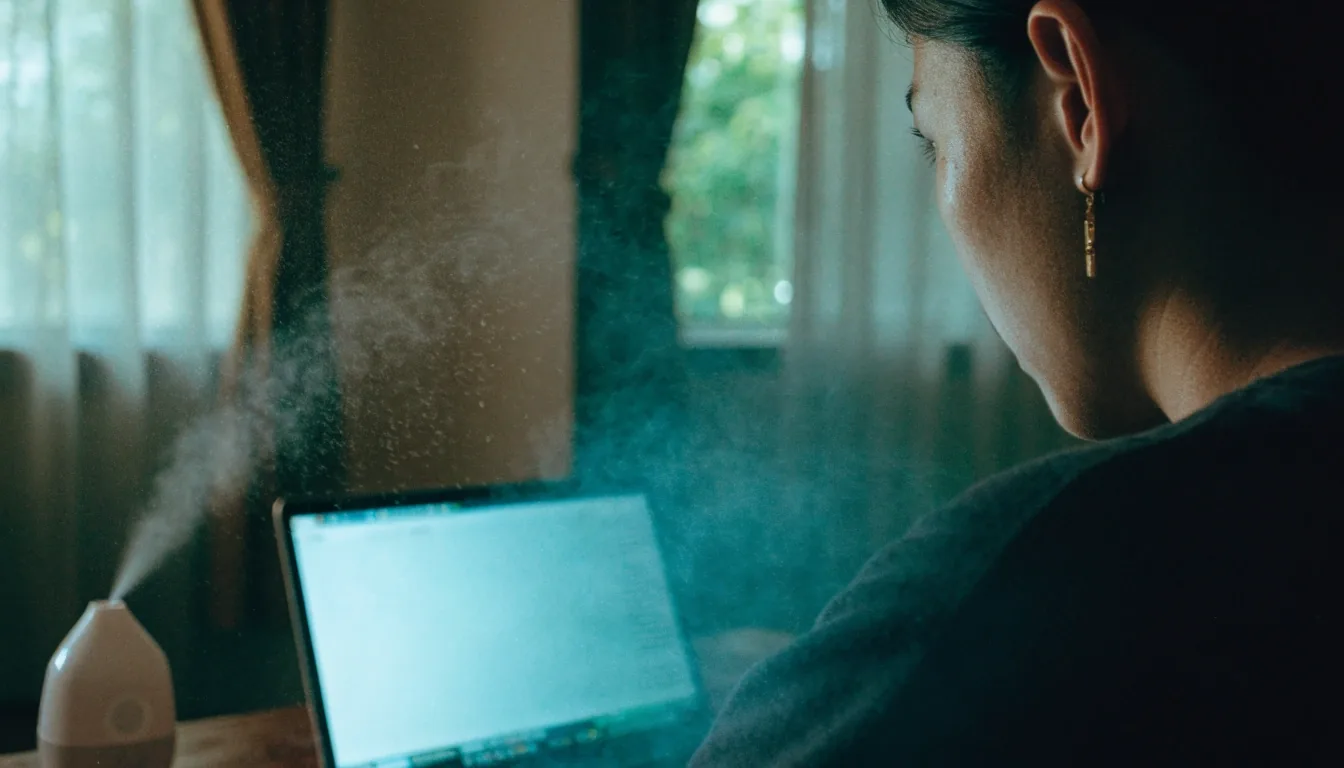
A person working at a desk in a humid room, turned toward the glow of a screen behind their shoulder

Screens do give off blue light. Whether a filter over your eyes changes how tired they feel is a separate question, and it has been tested.

Close view of a clock hand crossing a bare wall in raking light
Rest, measured.

Where the claim comes from

Screens do emit blue light, and blue light does affect the body's sleep timing at high enough exposure. The marketing takes that real fact and extends it to eye strain, which is a different question. Whether filtering blue light reduces the tired, dry feeling from screen work is an empirical matter, and it has been studied. The answer so far is not what the advertising implies.

It helps to separate the two claims, because they are not equally supported. The sleep-timing effect rests on light entering the eye in the hours before bed and shifting when the body expects to rest. The eye-strain effect rests on the assumption that visible blue light is itself what makes eyes ache after a long afternoon of work. Only one of those has held up under controlled comparison, and it is not the one printed on the box.

There is also a measurable difference between the light a screen throws and the light a summer sky throws. A monitor's blue output is a small fraction of what you get from simply stepping outside at noon. That gap matters when a product is marketed as though it were shielding you from something intense.
What the 17-study review found

A review covering 17 studies reported no meaningful benefit from blue-light blocking lenses for eye strain compared with standard lenses. That is the crux of the issue: when the lenses were compared against ordinary ones, the difference in comfort did not hold up. The review did not find the glasses harmful or useless for every purpose, but for the specific promise of reducing eye strain, the data did not support it.

What the comparison actually weighed

Against standard lenses

The tested promise: does the tint reduce strain compared with an ordinary clear lens, all else equal.

On comfort across a workday

Reported tiredness, dryness and headache after screen work, measured rather than recalled.

Where the gap settled

Denser dot fields read as narrower margins. For eye strain, the margin between the two lens types was too narrow to call a benefit.

The review is not a verdict on every use of tinted lenses. It is a verdict on the one use the advertising leans on hardest.

What ophthalmology guidance recommends

The American Academy of Ophthalmology does not recommend blue-light-blocking glasses because the evidence is lacking, and it separates eye strain relief from blue-light marketing claims. Its guidance points toward practical habits instead: breaks, distance viewing, and attention to dryness. That alignment with broader reviews matters, because it means the position is not a single source's opinion.

Break the work into shorter blocks

Look away from the screen on a regular schedule rather than pushing until the ache arrives. The habit costs nothing and it targets the cause directly: sustained near focus without release.

Move your eyes to something further away

Distance viewing lets the focusing muscles relax from the position they hold at arm's length all day. Anyone sitting in front of a monitor for hours benefits from this, glasses or not.

Treat dryness rather than the light

Staring reduces how often you blink, and air-conditioned rooms in Jakarta dry the surface further. Lubricating drops and a look at the room address that, while a tint over the lens changes nothing.

Why the debate keeps going

The gap between confident marketing and modest evidence is what keeps this conversation alive. A feature in the New York Times framed it as exactly that mismatch. Blue light is real, screen time is real, and people want a simple purchase that solves the problem. A product you can buy feels more actionable than a habit you have to maintain, even when the habit is the thing with support behind it.

There is a second reason the argument keeps circulating: the evidence is genuinely hard to summarise in a product page. Trials strain to separate the tint from everything else a new pair of glasses changes — how you sit, how often you look away, how much you notice your own eyes. A study is designed to hold those factors still. Your afternoon is not, which is why a personal impression of improvement can be real and still not be a measurable benefit over a clear lens.

Where the noise comes from

The pitch is short and sounds like a summary of research. The research is longer, hedged, and mostly about not finding the effect the pitch promises. When those two shapes are placed side by side, the difference is not a scandal; it is just what a study looks like next to an advertisement.

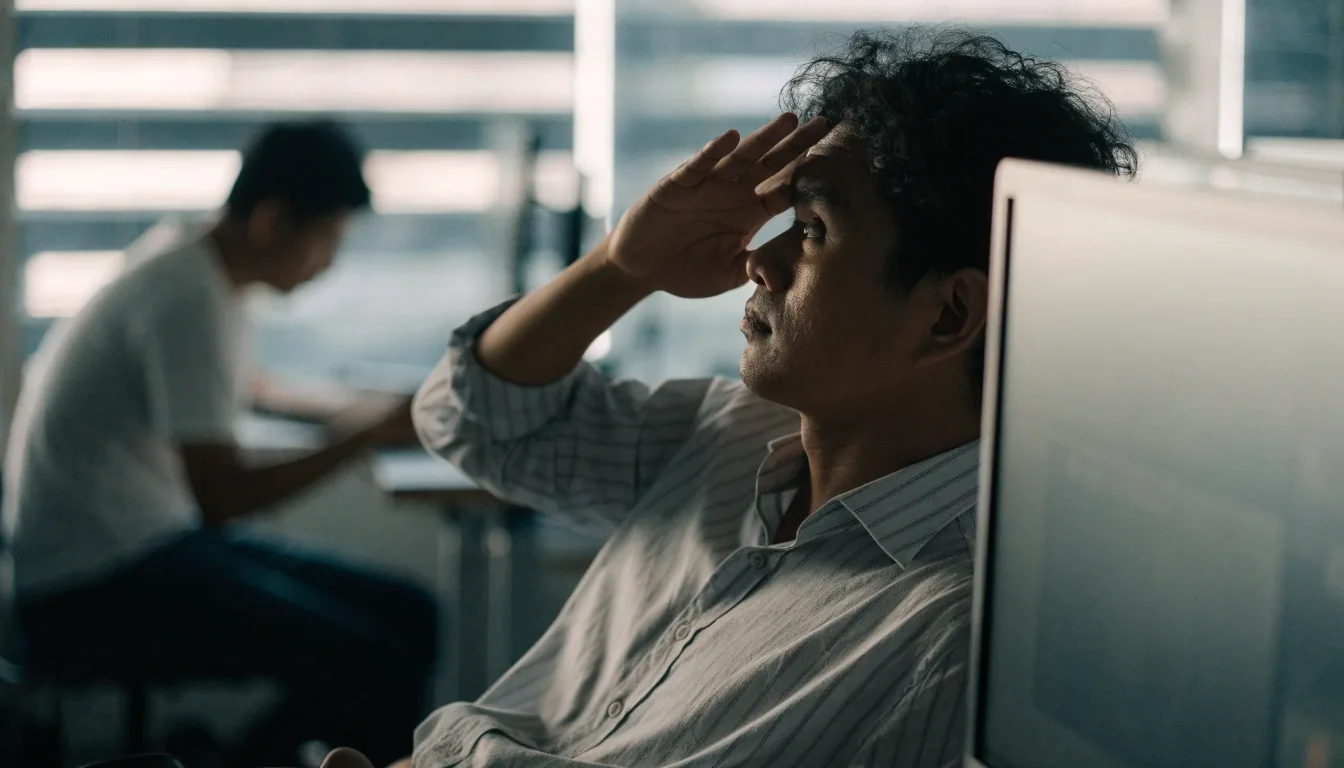
People working at desks in a bright shared workspace, seen from across the room

The room a screen sits in matters more than the coating on the lens in front of it.

What blue-light glasses might still do

If you find a pair comfortable, there is no strong reason to stop wearing them, and some people prefer the slight tint. What they should not do is replace the habits that address the actual causes of strain. If you are buying them specifically to fix tired eyes, the evidence suggests you would get more from a break schedule and a lighting check, which cost nothing.

There is also a plain preference argument, and it does not need a study behind it. If the tint makes a bright room easier to sit in, or you simply like how they look, that is a reason to own them. It is a different reason from the one on the packaging, and it is the honest one.

Reasonable use

Wear them if you like them. Pair them with breaks, distance viewing and a look at glare. Do not expect the lens to do work that a habit has to do.

The sleep question, kept separate

A different goal, a different answer.

Blue light exposure in the evening can affect sleep timing, and that is a different issue from eye strain. If your goal is sleep, the more reliable approach is reducing screen use or dimming screens in the hours before bed, rather than relying on lenses to offset a bright display. Mixing the two goals is how people end up disappointed in both.

  • Dim before bed Lower screen brightness in the evening hours so the bright display is not the last strong light your eyes meet.
  • Shorten the last hour Putting the screen down earlier changes your light exposure directly. A lens cannot shorten the time.
  • Keep the goals apart Treat sleep timing and eye comfort as two questions, and expect two different sets of answers.

What we do not sell

Visual Clarity Flow does not sell eyewear, filters, lamps, or drops, and we take no commission on anything mentioned here. That is deliberate. It means the guidance can say a product is not supported by the evidence without a conflict, and it means you can read this page without wondering what we are trying to sell you.

Why that matters here

A site that earns nothing from eyewear has no reason to defend it. If a review had found a real benefit for eye strain, this page would say so — that finding would cost us nothing. It simply is not what the studies reported.

Questions people ask before buying

Are blue-light glasses worth buying?

If your goal is reducing eye strain, the evidence does not support them over standard lenses. If you simply find them comfortable, that is a personal preference rather than a proven benefit. Both of those can be true at the same time, and separating them is the useful part.

Will they help me sleep better?

Evening blue light can affect sleep timing, but dimming screens or reducing use before bed is the more reliable approach. Lenses are not a substitute for changing when and how brightly you use screens. If sleep is the goal, change the schedule; that is the part with a clear connection to your light exposure.

My eyes feel better with them. Does that mean they work?

Comfort can come from several things, including the fact that any new glasses change how you sit and how often you look away. A feeling of improvement is not the same as a measured benefit over standard lenses. That does not make your experience false. It makes it hard to attribute to the tint alone.

Where to go next

The habits are the part with support behind them: scheduled breaks, distance viewing, a lighting check, and attention to dryness in air-conditioned rooms. Start with those, keep the glasses if you enjoy them, and treat the sleep question as the separate problem it is.

About this page

Written and reviewed by the Visual Clarity Flow editorial team in Jakarta. Reach us at [email protected].