
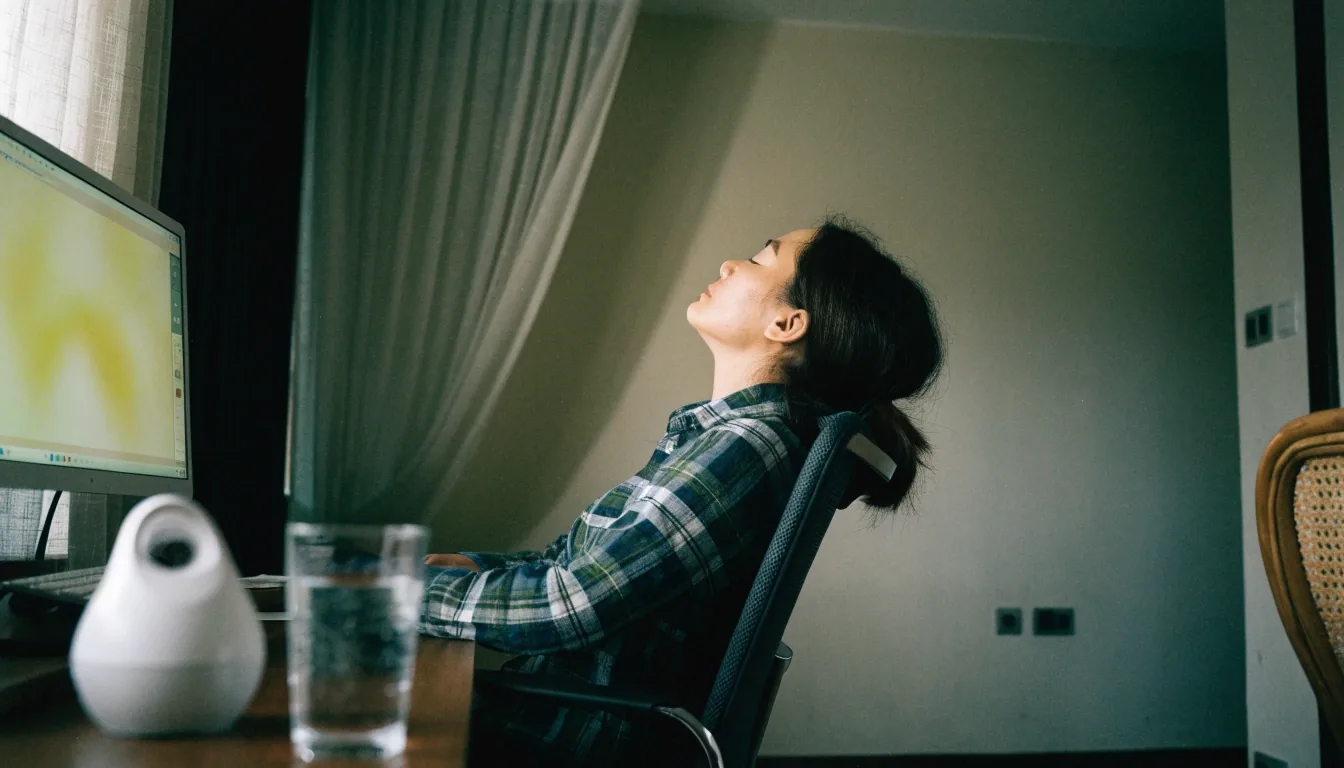
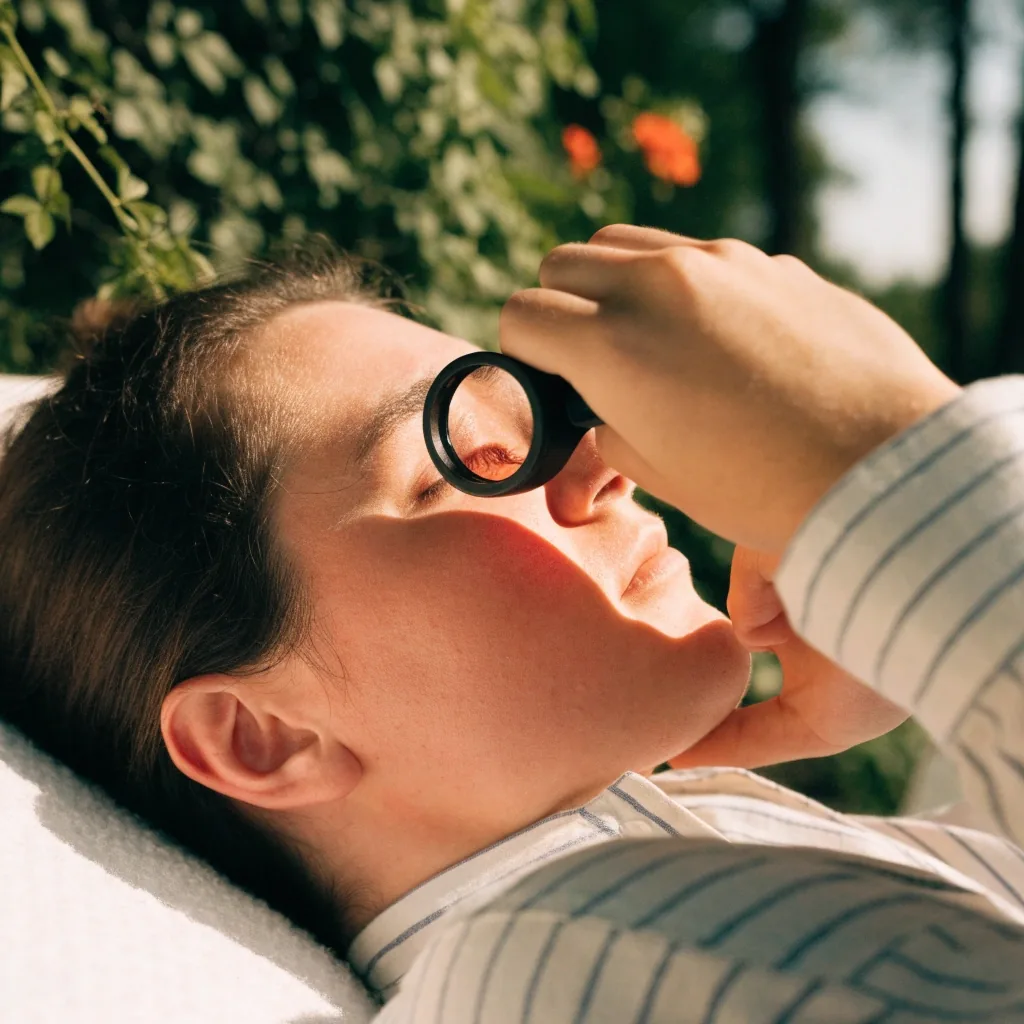
Editorial desk · Jakarta

About Visual Clarity Flow

We read the clinical and ophthalmology guidance on eye fatigue, then write the version a person can use on a normal workday.

Not a clinic. No eyewear, no drops, no diagnosis — an editorial resource for screen-heavy days.

An open notebook on a table with angled midday light across the blank page and a curtain lifted by moving air

A blank page, raking light, and a room that still has air in it — the working conditions every guide here assumes.

We take clinical guidance and turn it into something a person with a busy screen-heavy day can actually use.

Everything on this site is written for readers in Indonesia — where most screen time happens on a phone and the air-conditioning runs all day.

Close-up of a clock hand at an angle against a bare wall in raking light

Why this site exists

Most advice about eye fatigue arrives in two forms: a slogan and a product. The slogan is the 20-20-20 rule, repeated without explanation. The product is often a pair of blue-light glasses the evidence does not support for strain relief. Neither helps someone who just wants to get through a workday with less discomfort.

Visual Clarity Flow fills that gap. Each guide explains what a habit actually does, when it helps, and where it stops helping — a break that fixes focus but does nothing for dry air, a screen change that reduces glare but not blink rate, a pair of glasses that changes the tint of the world without changing how tired your eyes feel at 4pm.

The site is an educational resource, not a treatment service. We do not diagnose anything, and nothing published here replaces an eye exam when symptoms point that way.

A guide that cannot say "the evidence here is thin" is not a guide — it is an advertisement with a headline.

That standard shapes what gets published and what gets cut. Popular products are covered even when the honest conclusion is that they do not do what people hoped, because a reader who spends money on a habit deserves to know which habits hold up.

Who we write for

The audience is broad by design. The common thread is discomfort that comes from how screens are used, rather than from a condition that requires treatment. Where symptoms suggest something a professional should see, the guide says so plainly instead of offering a habit as a substitute.

Office workers in air-conditioned buildings

Eight hours of dry indoor air, a monitor at whatever height the desk allows, and a lunch break that is still spent looking at a screen. The advice that matters here is about humidity, blink rate, and viewing distance rather than screen brightness alone.

Students reading for exams

Long reading sessions on a laptop at the kitchen table, often in the evening when the room is dark and the screen is bright. The useful guidance is about contrast between the room and the screen, and about breaks that actually interrupt the reading rhythm.

Gamers and mobile-first users

Sessions measured in hours, and a phone held far closer to the face than a monitor ever is. Viewing distance and holding position carry more weight here than ambient room lighting, which is why those topics get their own guides rather than a passing mention.

How we research a page

Each guide starts from established clinical and ophthalmology sources rather than from marketing material. When a claim is contested, the page presents what the evidence shows, including when it shows little.

The blue-light page is the clearest example. Its position follows review findings and ophthalmology guidance rather than the direction the market is pushing, and it says directly that the case for tinted lenses as a strain remedy is weaker than the advertising around them suggests. If a source is thin, the page says the evidence is thin. If a claim depends on one small study, the page names that limitation instead of rounding it up into confidence.

Partly closed blinds at midday with humid haze softening the light through the window

What the window is doing at four in the afternoon shapes the advice more than the colour of the screen.

What we do not do

These limits are not modesty. They are what makes the rest of the guidance worth reading.

We do not sell products or take commissions

No affiliate links on the guidance pages, and no placement sold to anyone.

We do not promise that a habit will remove fatigue

Nobody can promise that, and writing it down would not make it true.

We do not diagnose, and we do not replace an eye exam

If symptoms need a professional, that is the only useful answer.

We do not round weak evidence up into confidence

Thin sourcing gets named as thin sourcing on the page itself.

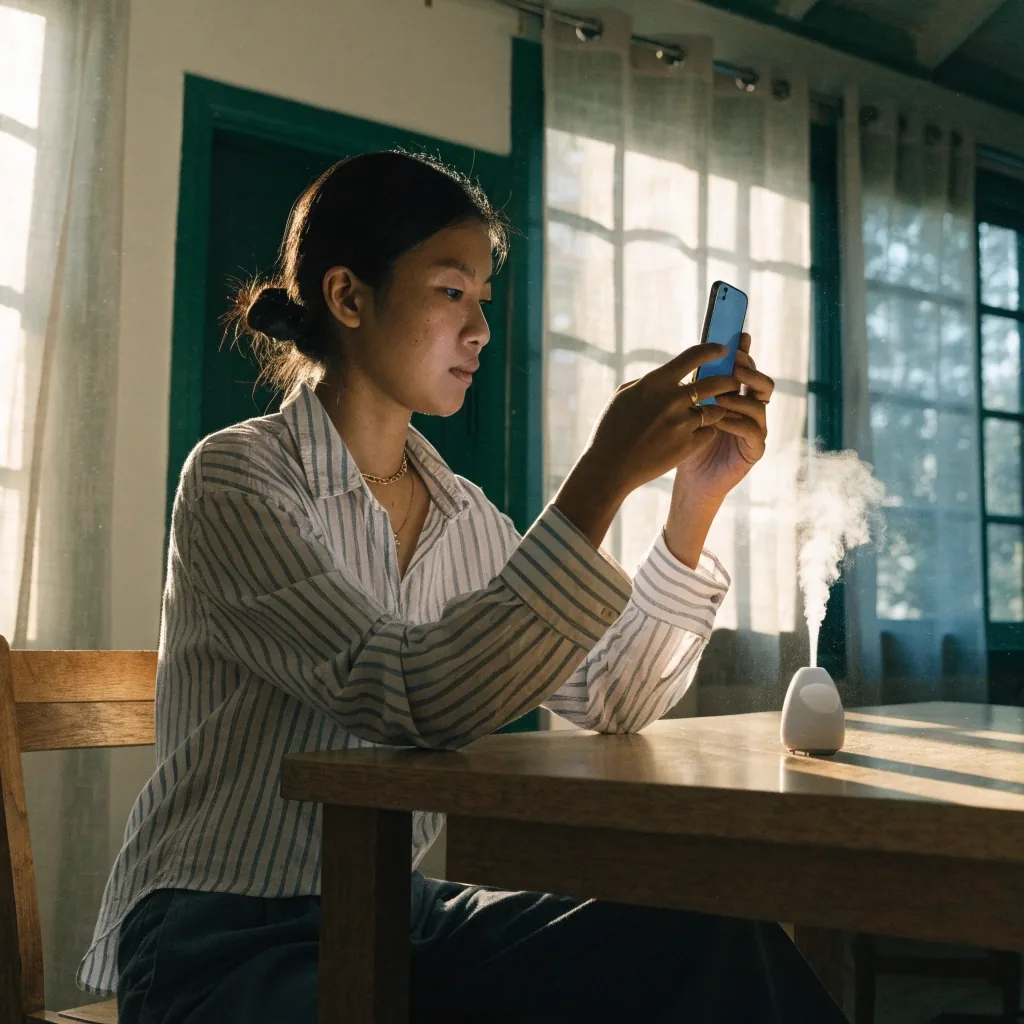
A humidifier's mist column rising against a bright window in a warm room

An Indonesia-relevant angle

A large share of screen time here happens on phones, and air-conditioned offices are common. That shapes which advice gets emphasis: dry indoor air, mobile viewing distance, and glare from bright outdoor light come up more often than they would in a colder-climate guide. The advice stays practical rather than theoretical.

Humidity is not a comfort detail in this climate. It changes how long a person can read before their eyes ask for a break.

Corrections and feedback

If something here is unclear, or you think a page has it wrong, tell us. We read corrections, and we update pages when a source changes or when a reader points out a gap.

A resource that cannot be corrected is not much of a resource.

Editorial standards

We aim for plain language, clear sourcing, and no claims we cannot stand behind. Pages are reviewed for accuracy against their underlying guidance, and anything that reads like marketing rather than information gets cut. Where the evidence does not support a popular product, we say so, even when that is not the answer people hoped for. That is the standard we hold each page to.

Independence

No company pays for placement on this site, and no product mentioned in the guides is here because of a commercial arrangement. When we explain why a category of product is not well supported, that judgment is based on the evidence rather than on who is advertising. Independence is the reason the guidance is worth your time.